






Introduction
Social Media Bullying Statistics: Social media is now a regular part of day-to-day life, particularly for young users. These platforms enable people to communicate and exchange ideas easily, but they have also facilitated online bullying. Social media bullying, also termed cyberbullying, mostly takes place when individuals use digital platforms to intimidate, insult, or harm others. Because online content spreads quickly and reaches many people at once, its effects can be more damaging than face-to-face bullying.
Studying this issue is essential to safeguard mental well-being, promote responsible online conduct, and create safer digital environments.
Editor’s Choice
- According to Softonic, 54.6% of U.S. teens say they have experienced social media bullying at some point in their lives.
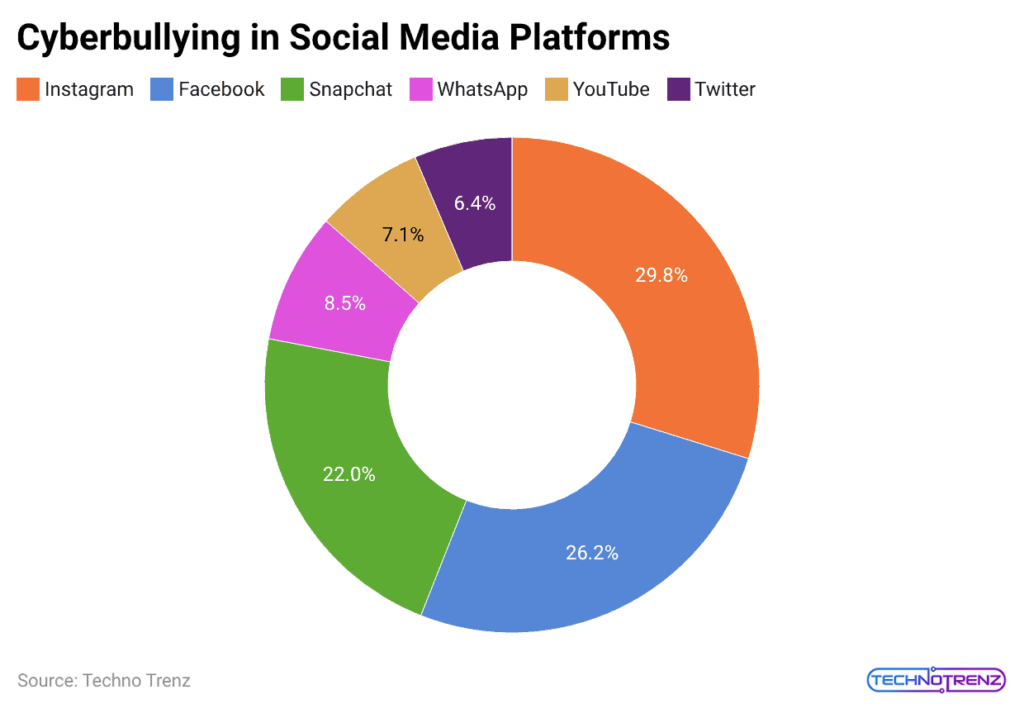
- As of 2025, Instagram is the most common platform where people face bullying, as 29.8% reported having negative experiences there, followed by Facebook at 26.2%.
- Among teens who report being bullied, 61% say the bullying happened because of how they look.
- Approximately 25% of students have engaged in online trolling while playing an online game.
- 64% of adults aged 18 to 29 report having experienced online bullying at least once.
- 54.6% of U.S. teens say they have experienced social media bullying at some point in their lives.
- 73% of girls and young women aged 13 to 21 have received sexual images online that they did not ask for.
- About 31.3% of victims reported experiencing emotional disturbance after repeated online bullying.
- Teenagers believe the best way to stop cyberbullying is to block the person who is bullying them.
- Appearance is the most common reason people are targeted online, reported by 61% of individuals.
- In the United States, social media awareness reached 27%, showing moderate public recognition in 2025.
Key Takeaway
- Based on findings from security.org, YouTube was identified as the platform where children faced the most online bullying, with 79% reporting negative experiences.
- Snapchat, followed by 69% of children, said they were bullied on the app.
- TikTok also showed a high level of cyberbullying, affecting about 64% of young users.
- Facebook reported a comparatively lower rate, but bullying still impacted 49% of children using the platform.
- The findings indicate that cyberbullying increases as children grow older.
- For every two-year increase in age between 10 and 18 years, the likelihood of cyberbullying rises by 2%.
- Children from families earning less than USD 75,000 per year are twice as likely to experience cyberbullying.
- In comparison, 22% of children from lower-income households reported cyberbullying, while only 11% of children from households earning more than USD 75,000 per year reported the same issue.
Social Platforms Where People Faced Bullying
(Reference: articles-img.sftcdn.net)
- In 2025, Instagram was the platform where online bullying was reported most often, with 29.8% of users experiencing negative behaviour, while 26.2% faced similar issues on Facebook.
- Snapchat also showed a high level of bullying at 22%, whereas fewer cases were reported on WhatsApp (8.5%), YouTube (7.1%), and Twitter (6.4%), making these platforms less commonly linked to cyberbullying.
Online Bullying And Harassment
- A report published by First Site Guide indicates that about 35% of teens have shared a screenshot of someone’s post or photo to make fun of them.
- Among teens who report being bullied, 61% say the bullying happened because of how they look.
- Around 41% of U.S. adults who use the internet have experienced online harassment personally.
- Facebook is the platform where 77% of online harassment victims claimed they have been targeted.
- Nearly 7 out of 10 young people faced social media bullying before they turned 18.
- Approximately 25% of students have engaged in online trolling while playing an online game.
- Nearly 17% of students have liked or shared online posts that openly mock another person.
- Meanwhile, 16% of students have engaged in online behaviour to annoy someone they dislike quietly.
- Around 12% of students have sent a mean or nasty message, either privately or publicly, to someone they know in real life.
- About 5% of students have created a fake profile to bother or upset another person online.
(Reference: articles-img.sftcdn.net)
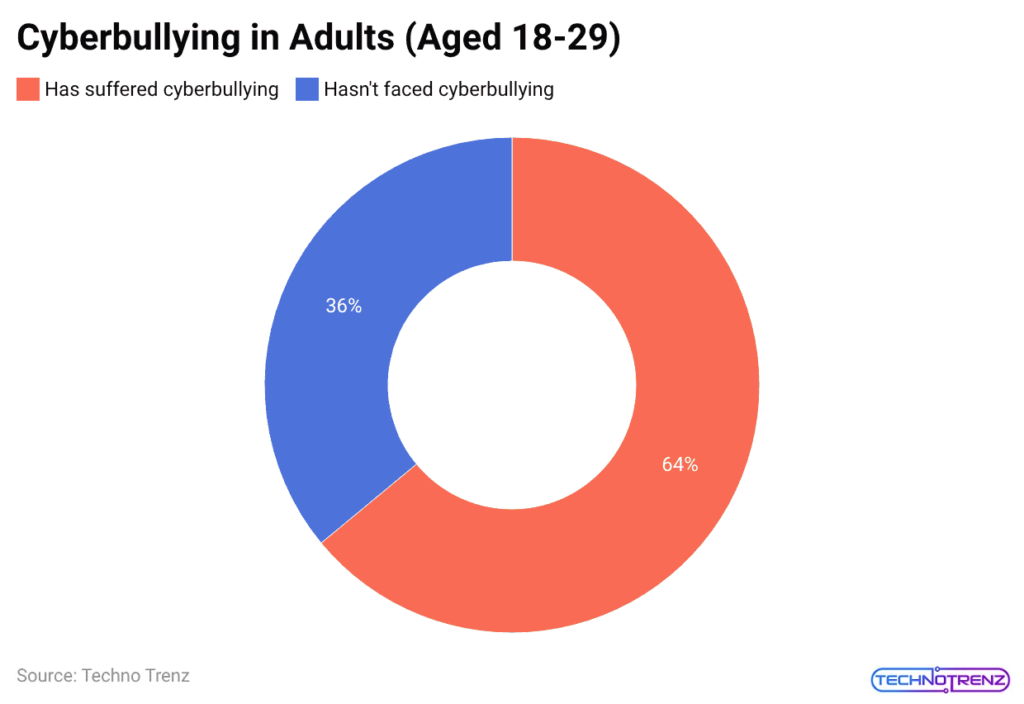
- 64% of adults aged 18 to 29 report having experienced online bullying at least once.
- In contrast, 36% of individuals in this age group report not having experienced such behaviour online.
- Softonic’s report further stated that 42% of LGBTQ+ teens report experiencing negative behaviour online in 2025.
- In comparison, 58% of teens in this group report not having experienced such experiences.
Common Types Of Social Media Bullying
- This mainly happens when someone uses angry or insulting language online to upset others.
- An outing occurs when private or embarrassing information about a person is shared online, often with a large audience.
- Trolls post offensive or controversial content to create chaos and provoke reactions.
- According to VerwellMind, about 42% of teenagers reported being called hurtful names via mobile phones or the Internet.
- Approximately 32% of adolescents reported that false rumours about them were spread online.
- Cyberbullies sometimes send sexual or inappropriate images or messages without the victim’s permission.
- Certain bullies repeatedly target victims with harassment, stalking, or physical threats. About 16% of teens reported receiving online threats.
Among U.S. Students
- According to Softonic, 54.6% of U.S. teens say they have experienced social media bullying at some point in their lives.
- Approximately 26.5% report currently experiencing such behaviour.
- The most common experience involves mean or hurtful comments posted online, reported by 30.4% of teens.
- Intentional exclusion from a group text or online chat is reported by 28.9% of respondents.
- Spreading false stories or rumours online affects 28.4% of teens.
- Around 26.9% report being embarrassed or humiliated by online posts or messages.
- Repeated unwanted contact through texts or online messages is reported by 22.5% of teens.
- Threats sent through mobile text messages are reported by 20.7% of respondents.
- Approximately 18.9% report that others were encouraged to target them together online.
- Direct online threats are reported by 18.5% of teens.
- Hurtful comments with sexual meaning are reported by 15.9% of respondents.
- Posting offensive or harmful photos online is experienced by 15.1% of teens.
- Mean comments related to race or skin colour are reported by 14.3% of respondents.
- Online stalking is reported by 14% of teens.
- Sharing personal information online without permission affects 12.8% of respondents.
- Only 12.5% report that someone impersonated them online.
- Hurtful or embarrassing videos posted online are reported by 10.1% of teens.
- Tracking or monitoring someone’s location after being told to stop is reported by 9.8% of respondents.
- Mean comments about religion are reported by 8.8% of adolescents.
- Creating a harmful or offensive website about someone is reported by 7.2% of respondents.
- Overall, 43.8% of adolescents report experiencing at least one of these behaviours at least twice.
Among Women
(Source: articles-img.sftcdn.net)
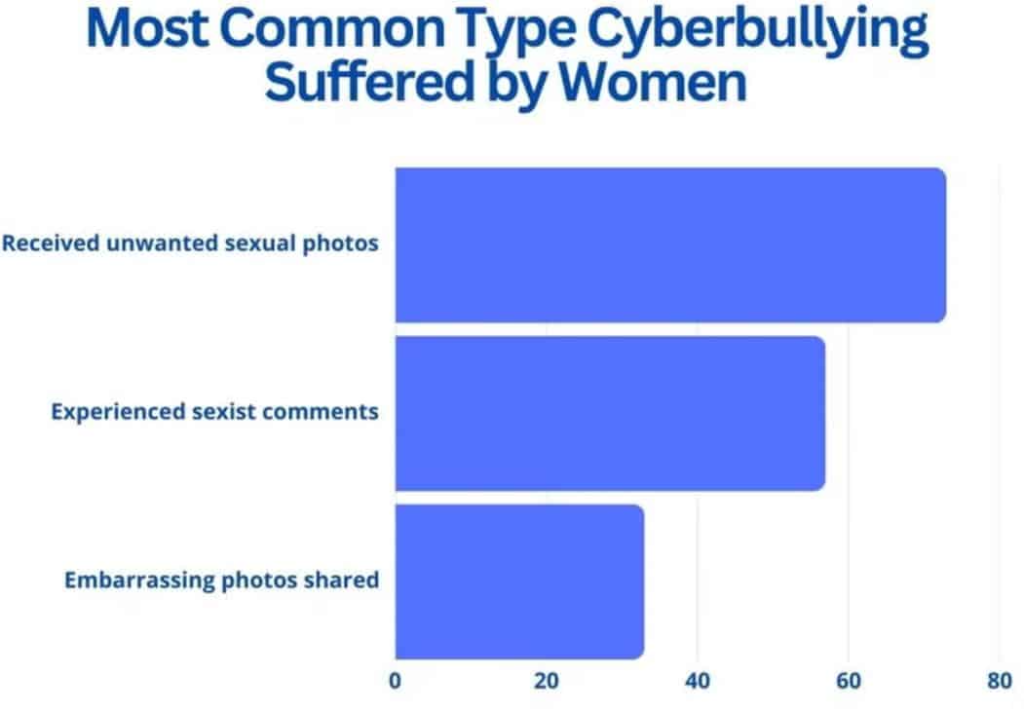
- 73% of girls and young women aged 13 to 21 have received sexual images online that they did not ask for.
- About 57% of women report being exposed to sexist or disrespectful comments on the internet.
- More than 33% say that personal or embarrassing photos of them were shared with others without their permission.
Social Media Bullying Incidents By Age Group (United States)
| Group/Age Category | Description |
| Teenagers (13–17 years) | 36% experienced harmful online behaviour, making them the most affected group. |
| Preteens (9–12 years) | 29% reported facing digital bullying. |
| Young adults (18–24 years) | 24% reported being targeted on online platforms. |
| Children (under 10 years) | 18% were exposed to disturbing messages or threats. |
| Adults (25–34 years) | Approximately 14% faced job-related online harassment. |
| Older adults (65+ years) | Only 7% reported online fraud or impersonation with harmful intent. |
| College students | 39% received unwanted messages or threats on social media. |
| High school students | 21% were affected by online rumours or misuse of private information. |
| Elementary school students | 12% reported experiencing teasing or name-calling via class chat apps. |
| Online learning students (all ages) | 25% reported harmful behaviour during virtual classes. |
By Gender
- In 2025, 54% of female teens reported facing harassment online, while this figure was 36% among male teens.
- Around 43% of non-binary youth said they were repeatedly targeted through online platforms.
- 28% of boys aged 10-14 admitted to taking part in harmful online behaviour.
- Appearance-related harassment affected 61% of female respondents in 2025.
- Online gaming voice chats were a source of harassment for 19% of male participants.
- Among transgender youth, 46% experienced misgendering or hateful language online.
- About 32% of girls reported threats involving private images.
- Performance-related targeting affected 23% of males aged 15-19.
Action Against Social Media Bullying By Teenagers
- According to the National Crime Prevention Council, teenagers believe the best way to stop cyberbullying is to block the person who is bullying them.
- 36% asked the bully to stop, while 34% chose to block all communication with them.
- Meanwhile, 29% did nothing, and 11% spoke to their parents about the incidents.
- Almost two-thirds of tweens have tried to help someone being bullied online.
- Additionally, 30% of tweens reported having helped more than once.
Emotional Reactions To Regular Bullying
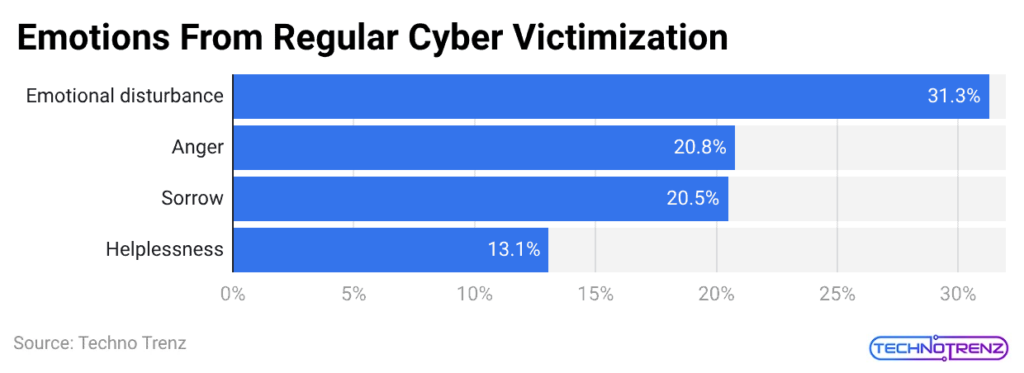
(Reference: cloudwards.net)
- About 31.3% of victims reported experiencing emotional disturbance after repeated online bullying.
- Around 20.8% of individuals felt anger as a result of cyberbullying.
- Nearly 13.1% of victims reported feeling helpless when targeted online.
- About 20.5% of people experienced sorrow due to regular cyber victimisation.
Psychological And Social Impacts Of Online Bullying In 2025
- About 38% of victims showed signs of depression, including long periods of sadness and social withdrawal.
- Nearly 22% of affected teens reported having suicidal thoughts after negative online experiences.
- Around 17% of students developed anxiety-related issues such as panic attacks or social fear.
- A loss of confidence and self-worth was reported by 41% of young victims.
- About 26% of teens avoided school or group activities due to online threats.
- Disordered eating patterns appeared in 19% of adolescents.
- Parents reported changes such as isolation or aggression in 45% of affected children.
Psychological And Behavioural Impacts
- About 41% of cyberbullying victims developed social anxiety, which made it hard for them to interact with others and affected their confidence.
- Around 37% experienced depression, which causes a serious emotional impact from online harassment.
- Nearly 26% reported having suicidal thoughts, highlighting the urgent need for support.
- 26% chose to delete their social media accounts to avoid bullying. Roughly 25% admitted to self-harming due to ongoing online abuse.
- Another 25% stopped using social media entirely for their mental health.
- Around 20% skipped school because of cyberbullying.
- About 14% developed eating disorders linked to emotional stress.
- Nearly 9% turned to drugs or alcohol, showing long-term behavioural effects.
Reasons For Social Media Bullying
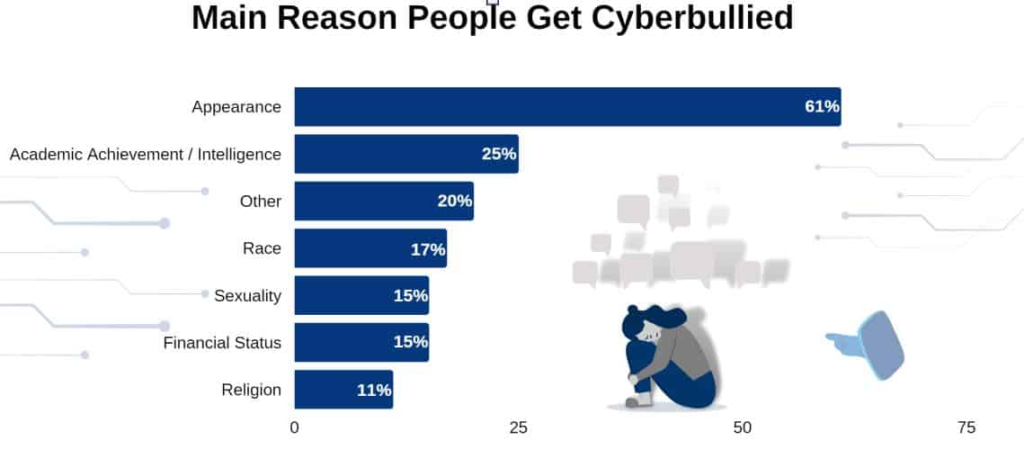
(Source: broadbandsearch.net)
- Appearance is the most common reason people are targeted online, reported by 61% of individuals.
- Academic performance or intelligence is a reason in 25% of reported cases.
- Other personal or unknown factors account for 20% of the reported incidents.
- Race is identified as a reason in 17% of the cases.
- Sexuality is a factor in 15% of the incidents.
- Financial status is also reported as a reason in 15% of the cases.
- Religion is mentioned as a reason in 11% of the reported situations.
Social Media Bullying Awareness Across Different Countries
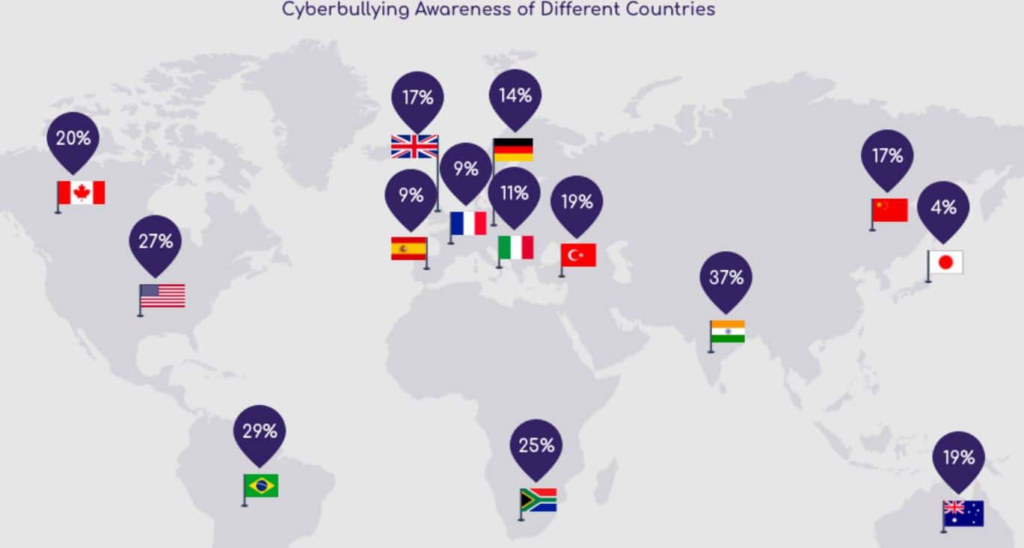
(Source: famisafe.wondershare.com)
- In the United States, awareness reached 27%, showing moderate public recognition in 2025.
- Canada recorded a lower level at 20%, and Brazil reported 29%.
- Across other regions, cyberbullying awareness varied, with the United Kingdom at 17% and Germany at 14%, France and Spain both at 9%, Italy at 11%, Turkey at 19%, India leading at 37%, China at 17%, Japan at 4%, Australia at 19%, and South Africa at 25%.
Conclusion
To conclude, social media bullying remains a growing concern in digital spaces. The rapid spread of harmful messages can seriously affect mental health, especially among young users.
Addressing this issue requires awareness, responsible online behaviour, and stronger preventive measures. Creating safe and respectful online environments is essential for long-term digital well-being.
FAQ
Social media bullying, also known as cyberbullying, is the use of digital platforms to threaten, harass, or harm others.
Children, teenagers, and young adults are most commonly affected, but people of all ages can experience cyberbullying.
It includes online harassment, spreading rumours, sharing private information, sending threatening messages, and posting harmful content.
Cyberbullying can lead to stress, anxiety, low self-esteem, depression, and, in severe cases, emotional trauma.
Users can report abusive content, block offenders, protect personal information, and practice respectful online communication.

Sources